A Burke bedroom ceiling had already let go of the joists. HouseWorks tried to save it, then demoed and rebuilt the whole ceiling and finished it smooth.
A Ceiling That Had Already Let Go
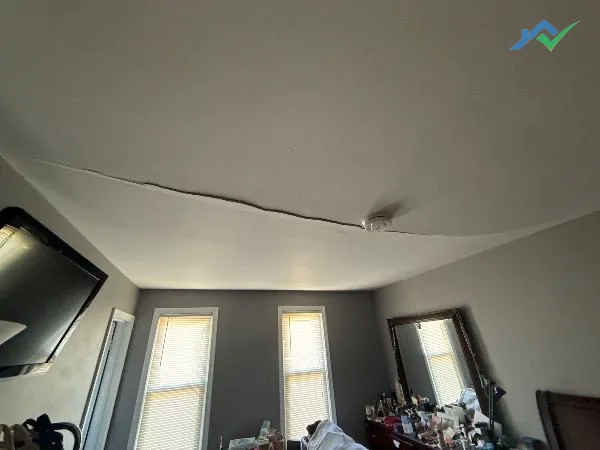
The call came from a homeowner in Burke, VA about a bedroom ceiling that had dropped along a long crack. From the doorway it looked like a patch job. Up close, the sag ran past the smoke detector, the drywall had separated from the joists, and the whole plane of the ceiling was out of line. This was one of our ceiling repair calls that turns into a replacement the moment you put a hand on it.
First, We Tried to Save It
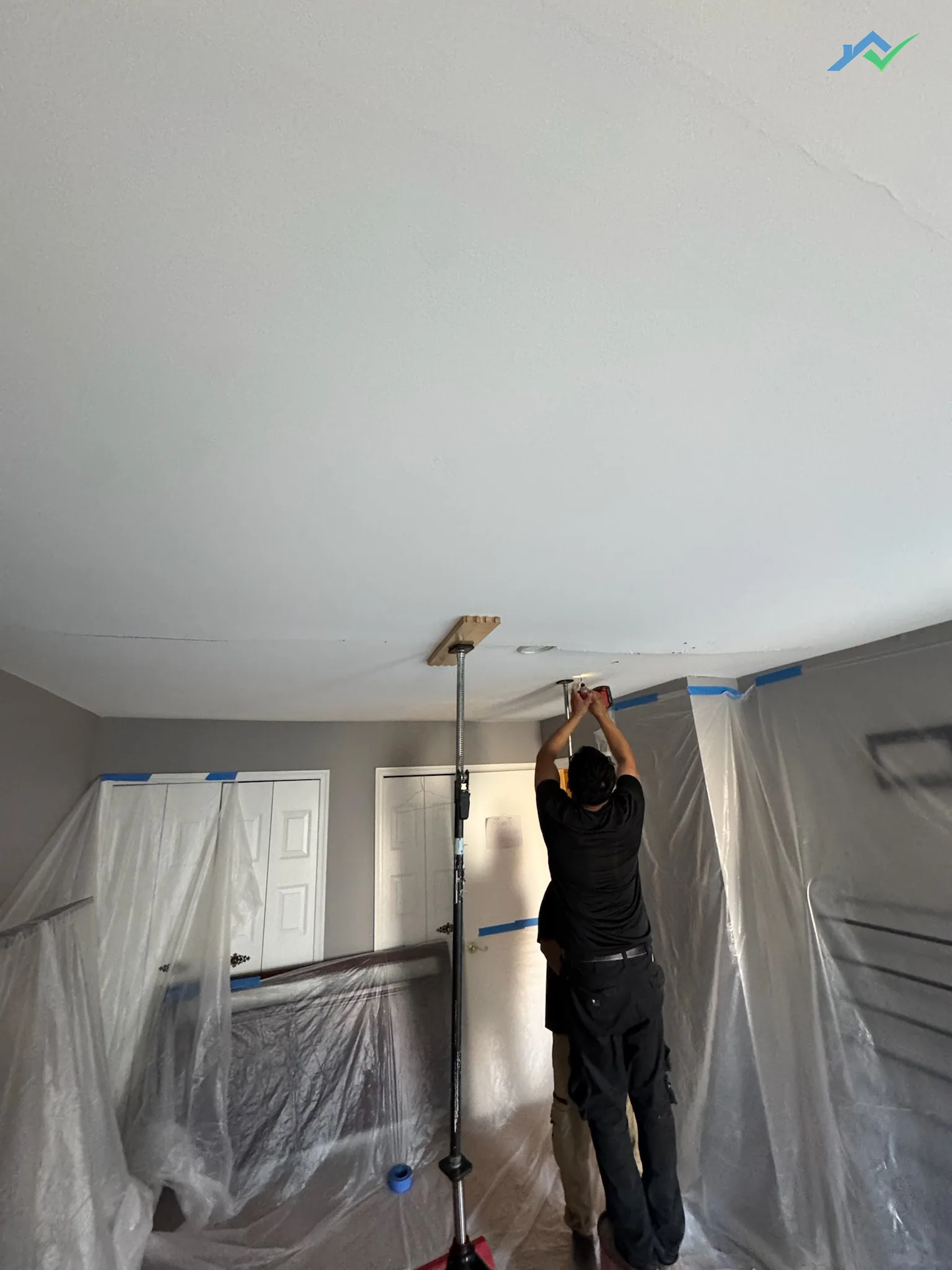
The first visit was the walkthrough and the estimate. We came back the next morning with jacks and screws to re-secure the ceiling and pull the sag back up. The more we tightened, the clearer it got that there was nothing left to pull back to — the board was tired, the sag crossed more than one sheet, and the crack had already traveled past the point where a patch would hold.
So we stopped. We took measurements, loaded up, and left to line up what the job actually needed: a trailer for the debris, the drywall and materials, and another set of hands for demo day.
Sealing the Room Before Anything Comes Down
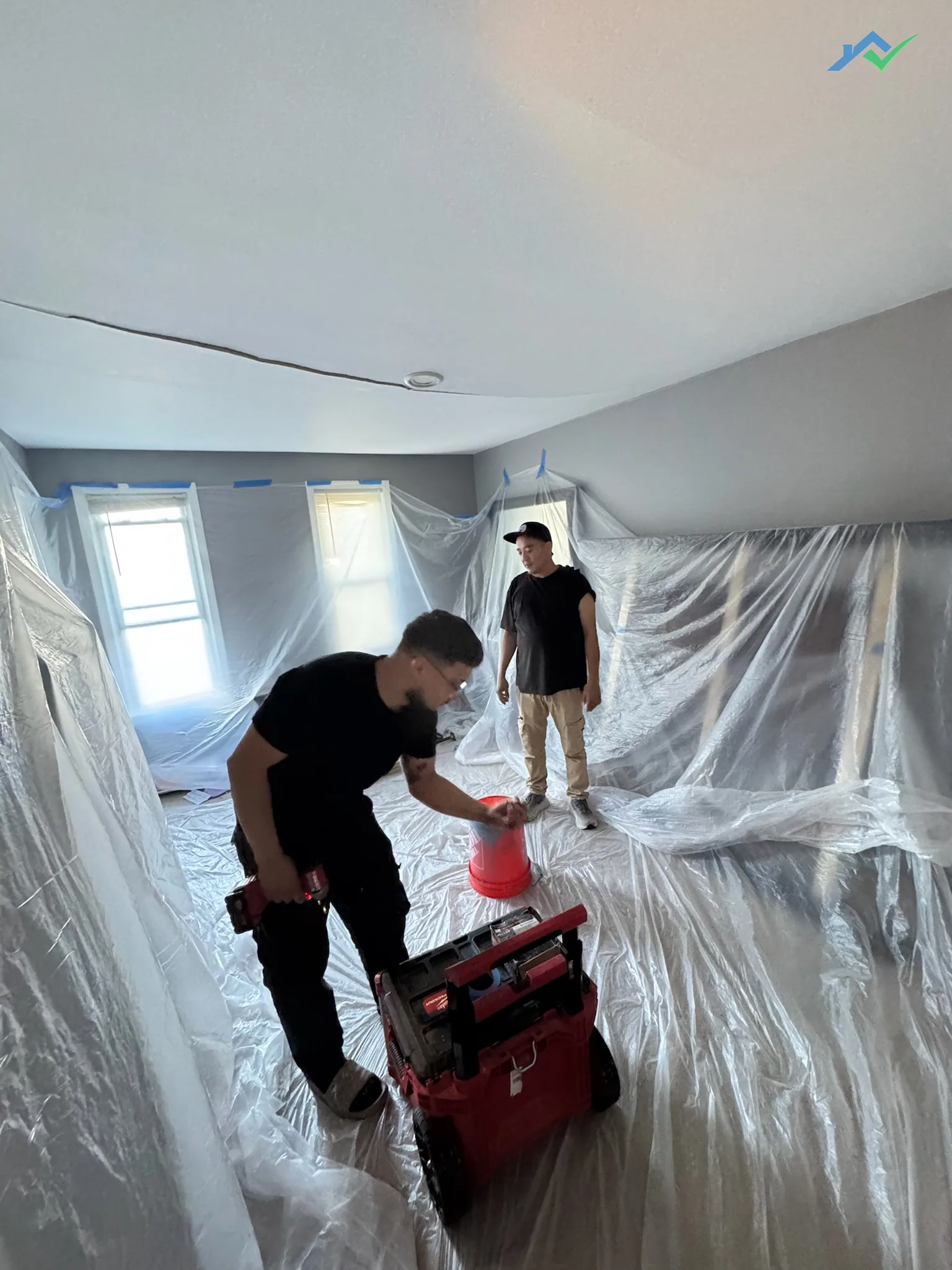
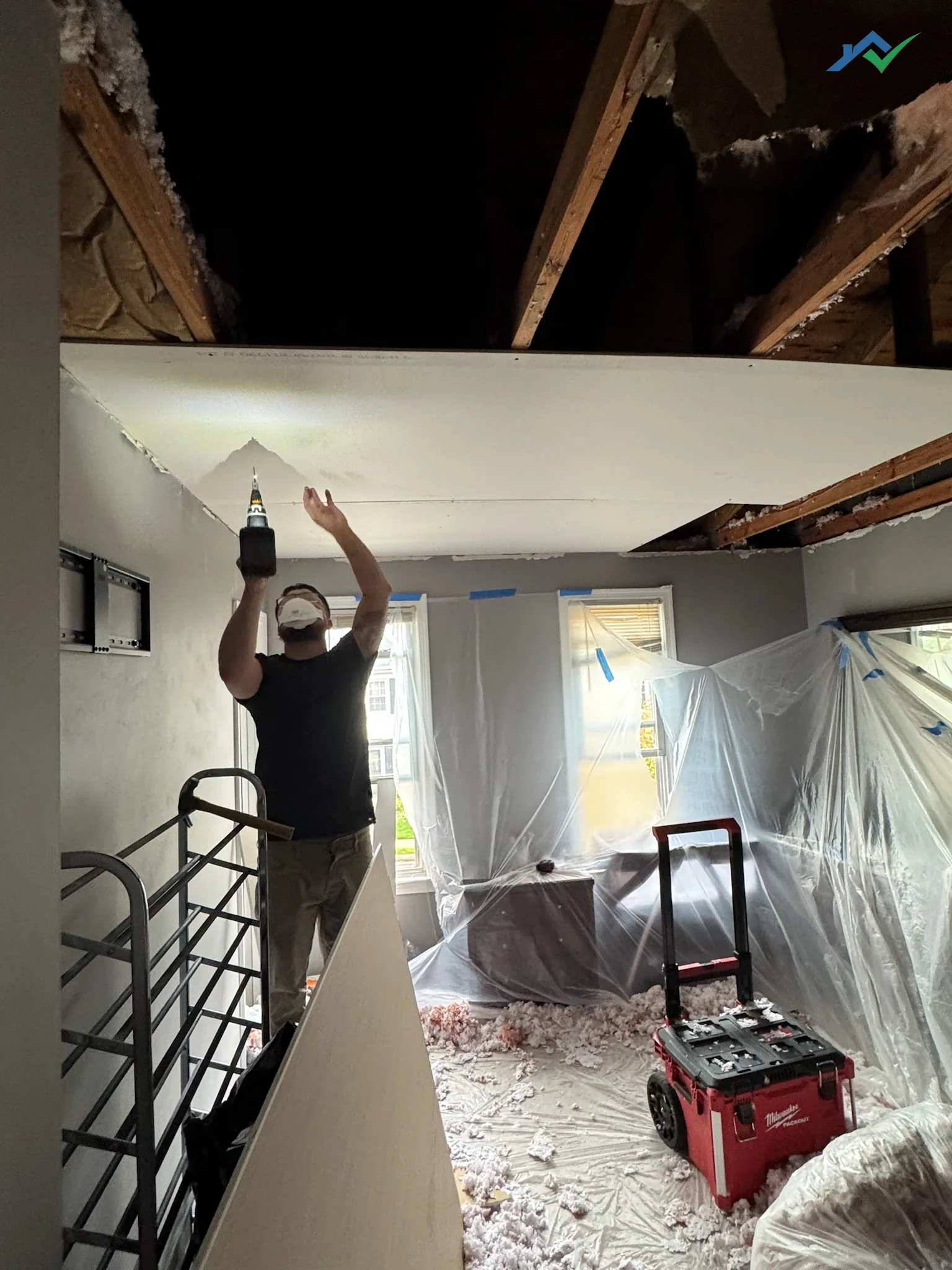
A full ceiling replacement makes a lot of dust, and none of it belongs on a homeowner's furniture. Before a single sheet came down, the bedroom was wrapped — walls, windows, and carpet under plastic, taped and sealed at the edges.
Demo Day
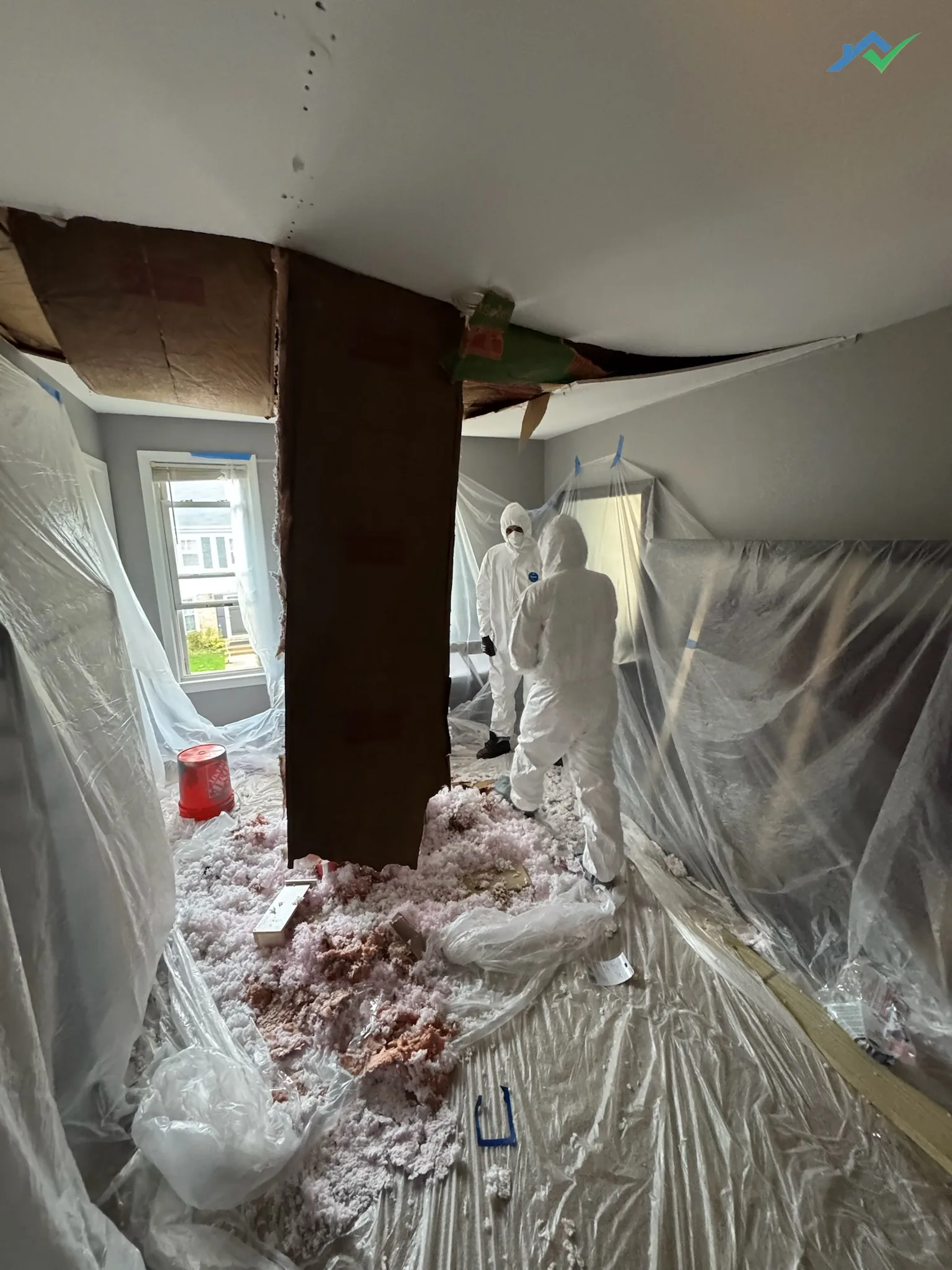
The whole ceiling came out. In Tyvek suits, the crew pulled the old drywall down to the joists, dropped the insulation, bagged the debris, and hauled it out on the trailer. There is no delicate way to do this part — the goal is to get it down fast, keep it contained, and leave the framing clean enough to rebuild on.
Rebuilding It
With the framing exposed and checked, new drywall went up in sheets, screwed off to the joists and fitted tight to the walls. This is where a ceiling replacement earns its keep over a patch: the whole plane is new, so there is no seam between old board and new board to telegraph through the finish later.
The Step That Sets the Schedule
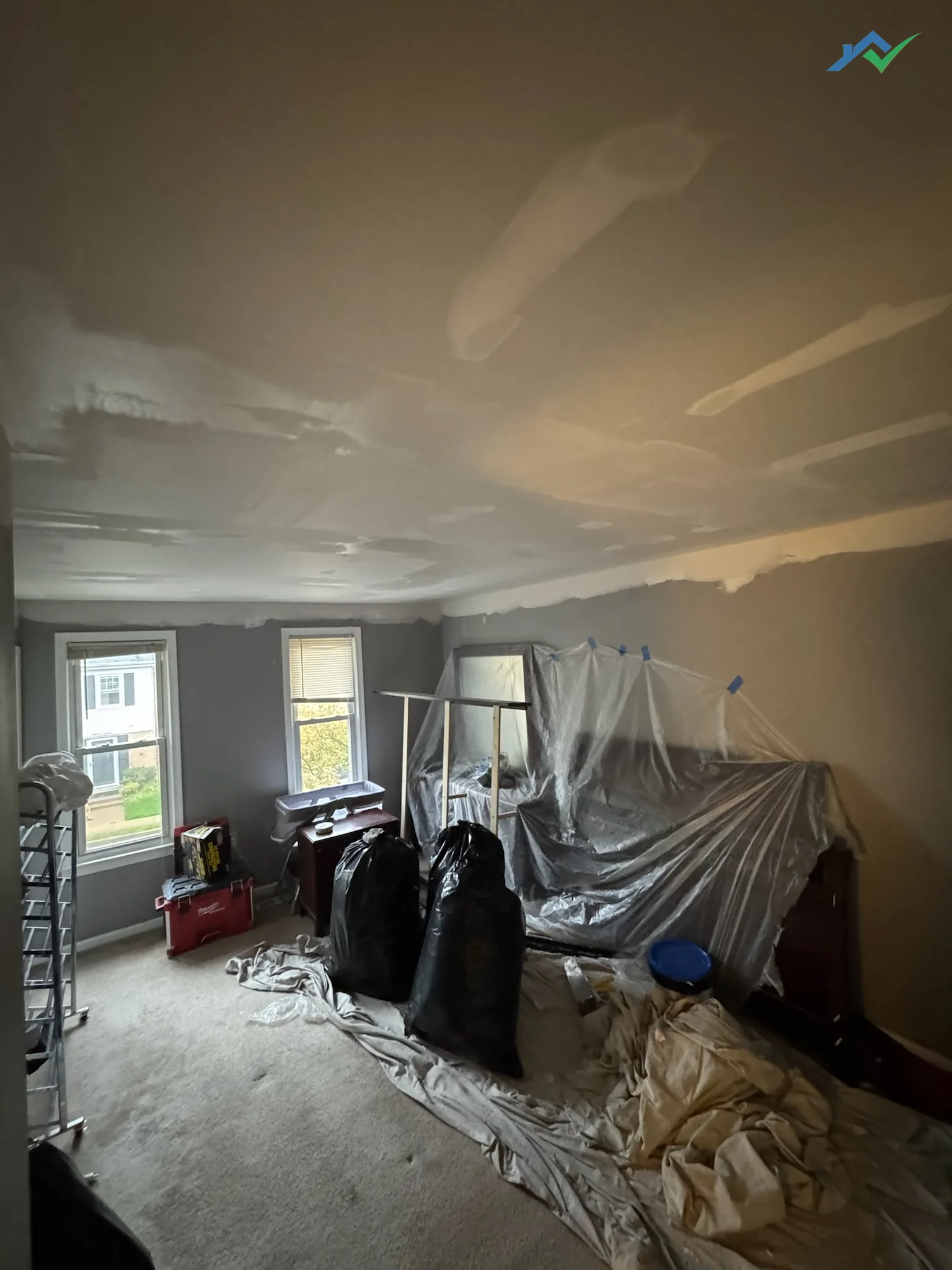
Tape and mud have to dry before they can be sanded, and a ceiling does not dry on anyone's timetable. The next day the compound was still soft, so we added another coat and left it alone rather than rushing a finish that would fail. That is the honest reason a ceiling replacement spreads across several visits — not labor, drying time.
Two Coats of Primer, Two Coats of Paint
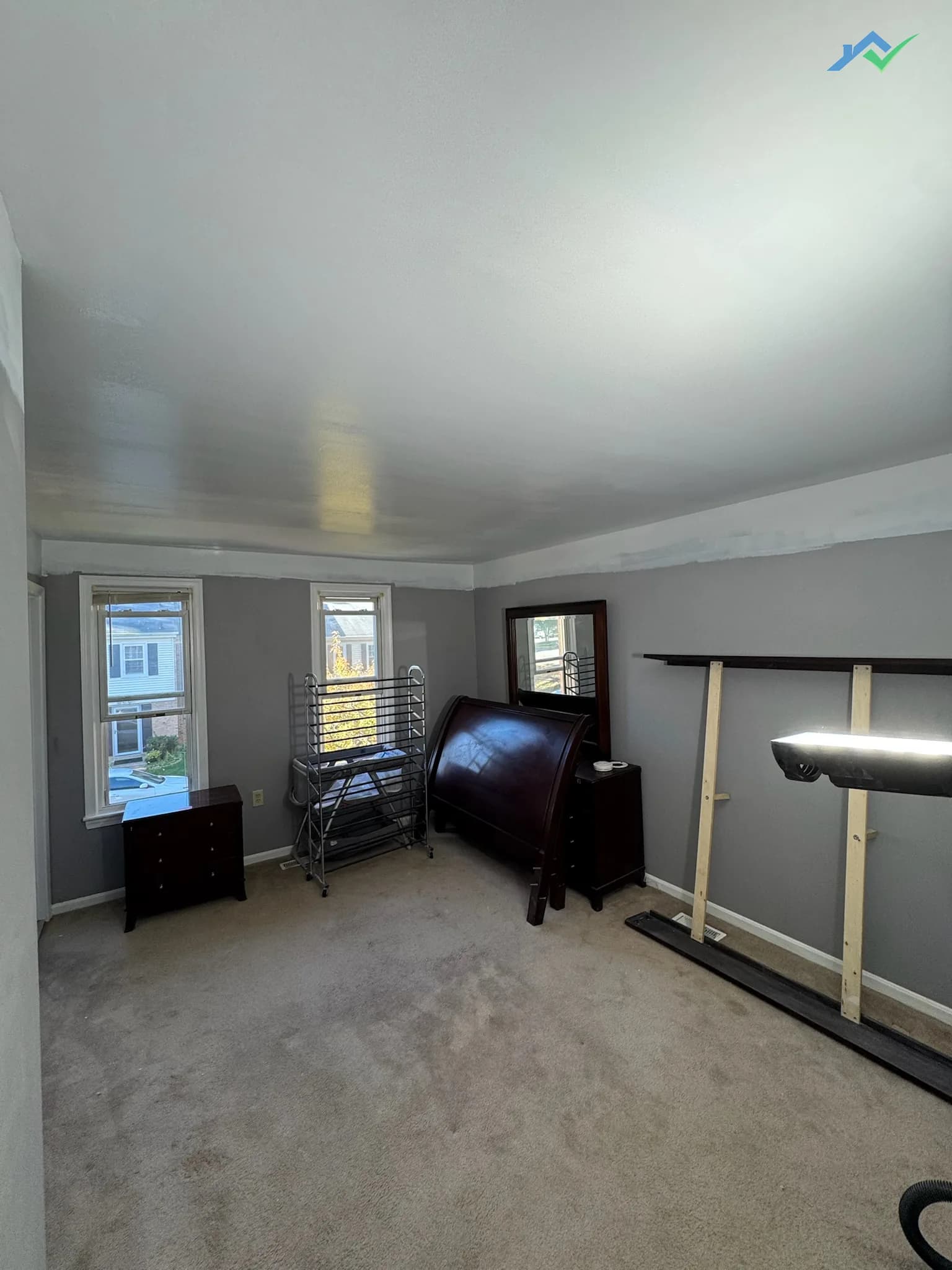
Once the mud was sound, the ceiling was sanded smooth, then two coats of primer and two coats of ceiling paint. The texture was blended to the surrounding ceilings so the new section does not read as a repair under a raking light.
Why We Replaced Instead of Patching
A ceiling can be patched when the damage is local and the board around it is still solid. It cannot when:
If a contractor tells you a ceiling like this can be patched without opening it up, ask what is holding the rest of it.
Burke Ceilings and the Housing Stock Around Them
Burke's housing was largely built out in the 1970s and 1980s, and the ceilings in those homes are at the age where original drywall, old repairs, and past leaks start showing up in the same room. We work this corridor often — Springfield, Fairfax, and Annandale are all a short drive — and the pattern is consistent: a ceiling that was patched once, painted over, and patched again before anyone opened it up to see why it kept moving.
**Need drywall help near Burke, VA? Get a free estimate today!**
Get Your Free Instant Estimate →
Upload a photo and describe what you're dealing with — the estimator gives you a real Northern Virginia price range in about 60 seconds, no phone tag required.
Frequently Asked Questions
How long does a full ceiling replacement take?
It depends on the size of the ceiling and drying conditions. The demo and rebuild usually happen in one long day, then taping and mudding need a day or more to dry before sanding, primer, and paint. A typical bedroom ceiling is finished across three to four visits, and we do not rush the drying step because that is what causes a finish to fail later.
Can a sagging ceiling be repaired instead of replaced?
Sometimes. A localized sag or crack in otherwise solid board can be re-secured and patched. Once the sag crosses multiple sheets, the crack keeps reopening after re-securing, or the drywall is soft and crumbly, a patch will not hold and the ceiling needs to come down. We check that before quoting a repair, not after.
Do I have to empty the room?
Yes. For maximum dust control, it is best to empty the room before demolition. Removing furniture and belongings gives us more room to work and makes it easier to protect the remaining surfaces. If an item is too large or difficult to move, let us know ahead of time so we can plan how to cover and protect it. We still use containment and floor protection; clearing the room adds another layer of dust control.
Will the new ceiling match the rest of the house?
We blend the texture and finish to the surrounding ceilings so the replacement does not stand out. Paint sheen and lighting are the two things that give a repair away, so the ceiling gets two coats of primer and two coats of ceiling paint rather than a spot touch-up.
Do you handle the cleanup and haul-away?
Yes. Debris is bagged and hauled out on a trailer as part of the job, and the plastic containment comes down with the room left clean. You are not left with a pile of old drywall and insulation to dispose of.